









|
Respiratory
Therapy
Respiratory
Care . . . A Profession With A Future!
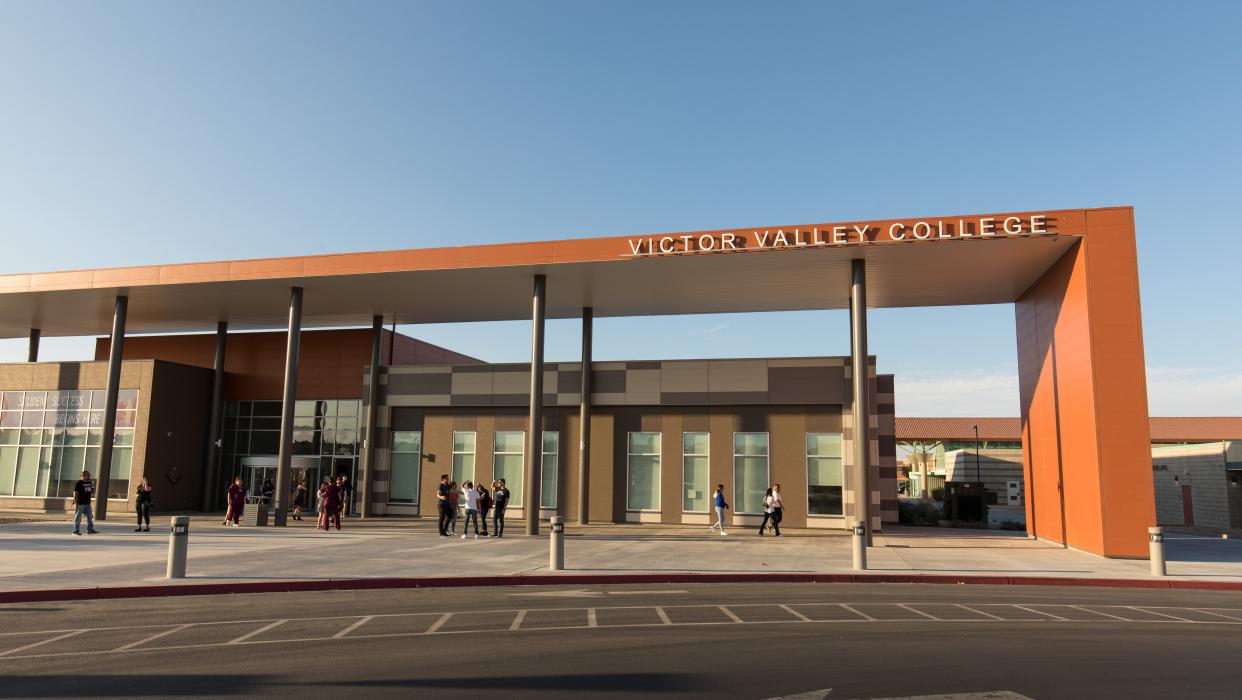
The Respiratory Therapy program here at Victor Valley
College prepares students for a career in health care as
an integral part of the health care team. Whether you are new in the work force
or changing careers, respiratory therapy provides the opportunity
for life-long learning and financial security.
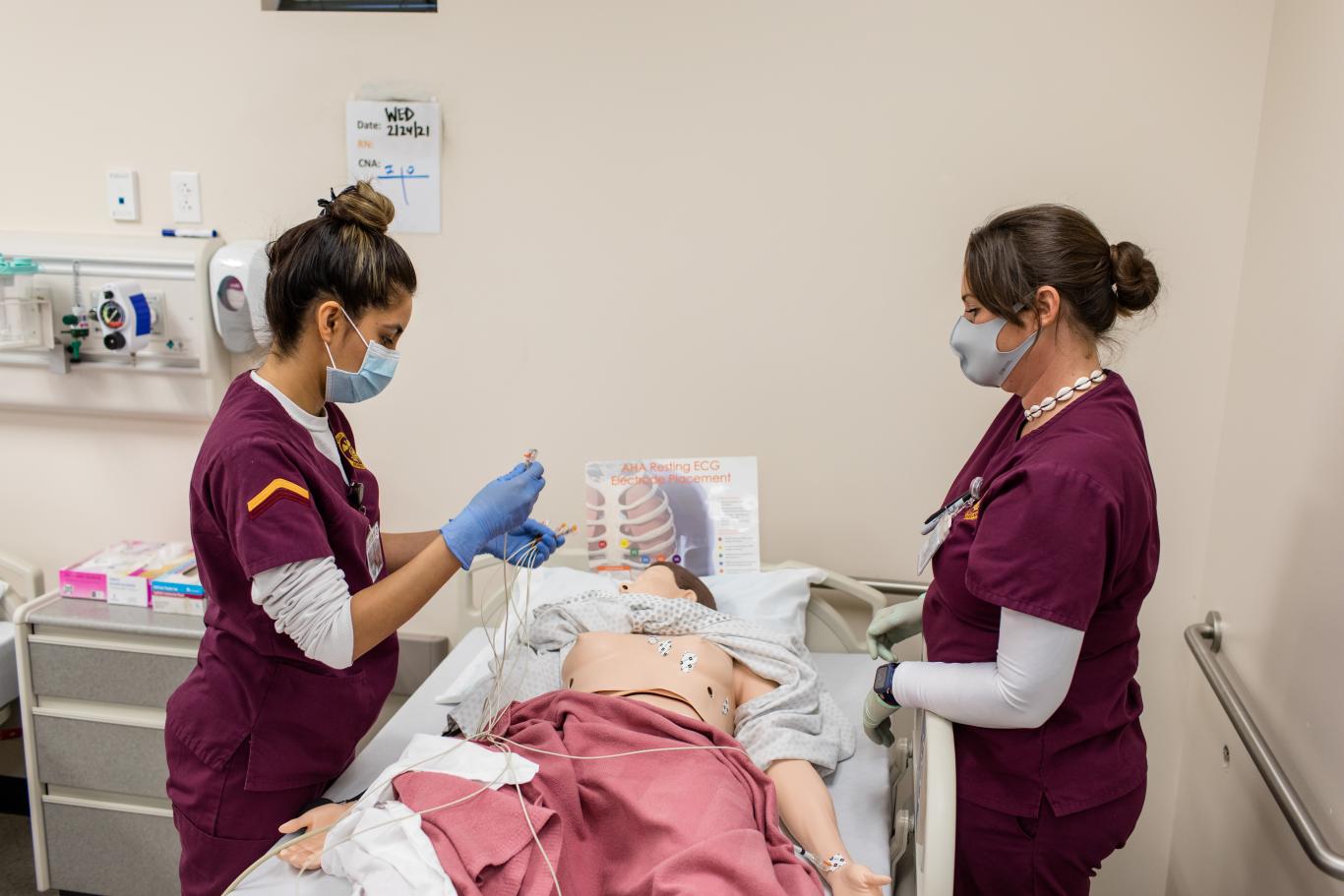
Respiratory therapists care for a wide variety of patients
of all ages that experience an array of cardiopulmonary disorders. Patient
assessment, care plans, diagnostic testing, and pulmonary treatments
are a few of the primary responsibilities of a respiratory therapist
in the clinical setting. For example, when a patient enters the
emergency room with a history of chronic lung disease, such as
chronic bronchitis or emphysema, the respiratory therapist may
be responsible for assessing the underlying cause of a particular
set of signs and symptoms that that patient presents with by performing
basic patient assessment, bedside pulmonary function testing and/or
arterial blood gas sampling. From the assessment and diagnostic
data, the respiratory therapist may follow a "therapist-driven" protocol
in attempt to improve that patient's ability to breathe comfortably.
Likewise, in the event of a high-risk delivery, where a premature
newborn may be at risk for breathing complications, respiratory
therapist are responsible for assessing the newborn, assisting
with ventilation if needed, working in conjunction with the neonatologist
to devise a care plan, and implementing that care plan. These are
just two examples of the important role respiratory therapists'
play in prevention, maintenance, and improvement toward quality
of life in patients that experience cardiopulmonary complications.
Most respiratory therapists are employed in the hospital setting,
working 12 hours shifts, usually 3-4 days a week. Increasingly,
there are career opportunities in nursing homes, in private homes,
with medical equipment supply companies, in home health agencies,
and in physicians' offices. Annual earnings of respiratory therapists
range from approximately $40,000 to $54,000.
FACULTY – FULL-TIME
Traci Marin, Program Director/Instructor
Sandee Cegielski, Clinical Director
CAREER OPPORTUNITIES
- Respiratory Care Practitioner
- Critical Care Specialist
- Diagnostic Testing Specialist
- Education
- Home Care
- Neonatal/Pediatric Specialist
- Pulmonary Rehabilitation
- Research
- Manufacturing
- Physician Offices and Clinics
Job opportunities are
great and continue to grow due to the
significant growth in numbers of the elderly
population. The elderly are most
susceptible and suffer from respiratory
and cardiopulmonary disorders such as pneumonia, chronic
bronchitis,
emphysema, and coronary
heart disease. During the past decade there
have
been major advances in the treatment of myocardial
infarction (heart
attacks) and heart
failure, trauma and burn care, and treatment
of premature infants. These advances have increased
the demand for
competent, critical-thinking
respiratory therapist.
The Victor Valley College Respiratory Therapy
Program provides
hospital skills and supervised
clinical
practices in Inland
Empire hospitals. Graduates of the VVC,
as a result of the education and
training they receive, pass the state licensing
and national registry exams at a rate much
greater than
the national
average. The Respiratory
Therapy Program is fully accredited by
the American Medical Association.
PROGRAM APPLICATION
In order to be admitted to the Respiratory
Therapy program, separate application must
be made in
addition to application
to the college.
Applications are available January through
March 15. Applications can be obtained
online shortly
before the application period
or in the Health Sciences office during
the application period. .
See ADMISSION
INFORMATION for APPLICATION
PROCEDURE.
ESTIMATED COSTS
- $4,500 (2-year Respiratory
Therapy Program)
- $4,000 (Preparation courses.)
- $8,500 Total
OVERVIEW/CURRICULUM FOR DEGREE
RESPIRATORY THERAPY (A.S. AND CERTIFICATE)
This certificate prepares the student to take the state examination
to practice as an entry-level practitioner.
Requirements:
78 units minimum
| Group A: All of
the following must be completed: |
| |
|
Units |
| RSPT 230 |
Introduction to Respiratory
Therapy |
3.0 |
| RSPT 231 |
Orientation to and basic
Function of Respiratory Therapy |
10.0 |
| RSPT 232 |
Patient Assessment and
Clinical Application of Respiratory Care |
10.0 |
| RSPT 233 |
Intensive Respiratory
Care and Advanced Pulmonary Physiology |
13.0 |
| RSPT 234 |
Neonatal and Pediatric
Respiratory Care and Pathophysiology and Pulmonary Rehabilitation |
13.0 |
| RSPT 239 |
Introduction to Mechanical
Ventilation |
1-2 |
| |
| BIOL 211 |
Human Anatomy OR |
5.0 |
| BIOL 212 |
Human Anatomy |
4.0 |
| BIOL 221 |
General Microbiology |
5.0 |
| BIOL 231 |
Human Physiology OR |
4.0 |
| BIOL 232 |
Human Physiology |
5.0 |
| ENGL 101 |
English Composition and
Reading |
3.0 |
| PSYCH 101 |
General Psychology |
3.0 |
| Group B: One of
the following must be completed: |
| |
|
Units |
| SPEECH 6 |
Human Communication |
3.0 |
| SPEECH 7 |
Family Communication |
3.0 |
| SPEECH 8 |
Group Discussion |
3.0 |
| SPEECH 9 |
Public Speaking |
3.0 |
Group C: One of the following must be completed:
One course that meets the VVC Logic\Mathematical general education
requirements.
Group D: One of the following must be completed:
One course that meets the VVC Humanities general education requirements.
Group E: One of the following must be completed:
One Physical Education Course.
Any course which meets the general education transfer requirements
to the CSU or UC system may be used as a general education requirement
for the associate degree in Groups III and IV.
The Respiratory Therapy Faculty accepts and operates within the
framework of the philosophy and objectives of Victor Valley College.
The Associate Degree in Respiratory Therapy provides a foundation
for continuing personal, professional and educational development,
and includes the study of the arts, sciences and humanities. The
program is designed to produce a competent, self-directed respiratory
therapist who, in a variety of settings, can assume leadership
in planning, providing, and evaluating respiratory care of individuals
and groups; who participates in the determination of the goals
of the profession; and who actively searches for knowledge in respiratory
therapy and related fields essential to the development and application
of scientific respiratory care.
The respiratory therapy graduate receives the Associate of Science
Degree and is eligible to take the National Registry Exam for Respiratory
Therapist and the entry-level exam.
Associate Degree
To earn an Associate in Science degree with a major in Respiratory
Therapy, complete all requirements for the Respiratory Therapy
Certificate. The Respiratory Therapy Certificate above includes
all requirements for both a certificate and an Associate in Science
degree in Respiratory Therapy.
Transfer
Most Respiratory Therapy courses do not transfer. Two universities
offer a bachelor's degree in Respiratory Therapy:
• California College for Health Sciences, National City
• Loma Linda University.
Students in this field may choose to pursue a bachelor's degree
in Emergency Medical Care, Respiratory Therapy, or related majors
from Loma Linda University or other universities. A handout with
all transfer requirements for a B.S. degree in Emergency Medical
Care, Respiratory Therapy, or other related medical degrees from
Loma Linda University is available in the Counseling Department.
STUDENT
BACKGROUND CHECK
In
an effort to comply with the recommendations of the Joint
commission on Accreditation of Healthcare Organizations,
the majority of the major healthcare facilities and agencies
utilized by the College for clinical training require
that each student undergo and pass a student background
check prior to participating in clinical rotations. Each
student, at his/her expense, is responsible for acquiring
the student background check report and authorizing the
submission of results to the college.
No
student will be permitted to participate in a clinical
rotation until the results have been received, reviewed,
and accepted by the designated program director. Failure
to submit to and pass the required student background
check will result in the student being terminated from
the respective program.
Students
accepted into certain programs, will be required to have
a physical examination, a chest X-ray and/or PPD, lab
tests, required immunizations, and a criminal background
check. These are required in order to comply with the
program and clinical agencies’ contractual requirements.
Also, the following items are commonly required: a current
American Heart Association CPR Certificate and liability
insurance (certain limits apply). Most Health Sciences
programs have a group policy available, or the students
may purchase their own policy. All of the above will
be completed at the student’s expense. In most
cases these items will be completed, with copies submitted,
before the first day of the semester. Not submitting
the required documentation may preclude the student’s
ability to continue in the program.
Details
regarding these requirements may be obtained from the
respective program.
|
It is always
recommended that students considering a career or transfer
for an advanced
degree in health careers meet with Diane
Wollan, VVC Counselor. Contact the Counseling Department for an
appointment. Walk—in appointments are also available during
certain times of the semester. They can be reached at (760) 245-4271,
Extension 2296
PROGRAM ACCREDITATION
The Victor Valley College Respiratory Therapy Program is accredited
by the Commission on Accreditation of Allied Health Education Programs
( www.caahep.org ) upon the recommendation of the Committee on
Accreditation for Respiratory Care (CoARC).
CONTACT INFORMATION
Traci Marin, MPH, RRT
Program Director, Respiratory Therapy Program
Phone: 760-245-4271, Ext. 2509
Fax: 760 951-5861
E-mail: marint@vvc.edu
General Information
Health Sciences/Allied Health Office Assistant 760-245-4271, Ext.
2463
Last
Modified:
2008-06-26 .
|